

TL;DR
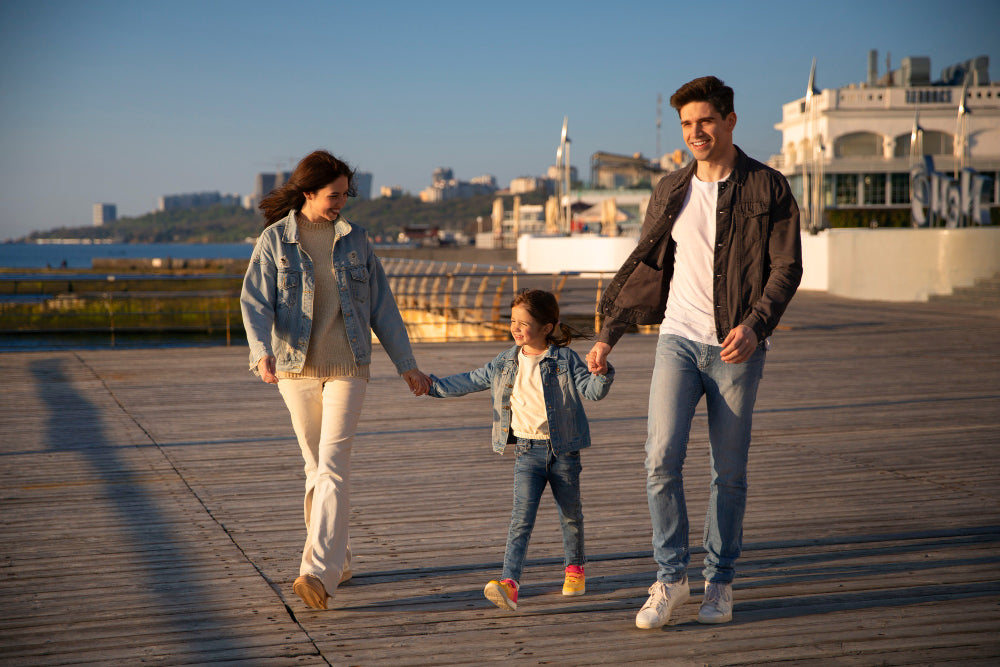
Visiting a new city with a young child is a joyful experience when planned intelligently and with flexibility. The key to success lies in choosing a suitable destination, creating a relaxed itinerary with maximum two objectives per day, alternating visits with play breaks, and choosing activities that involve the whole family. Make sure you have an entertainment kit and snacks with you, use a baby carrier for mobility, and turn every moment into a precious memory.
Picture this: cobblestone streets, historic buildings bathed in sunset light, the aroma of coffee from a charming terrace... and a sharp scream that breaks the spell. The dream of a relaxing city break can quickly transform into an endurance race when a sub-three-foot explorer enters the equation. But it doesn't have to be this way. Traveling to a new city with a young child isn't a mission impossible, but an opportunity to rediscover the world through their curious eyes.
This guide is your compass to successfully navigate the challenges and maximize the joys of such an adventure. We'll debunk the myth that urban vacations are reserved only for adults and provide you with concrete strategies to transform any getaway into a collection of unforgettable memories for the entire family.
Planning is Key: What to Do Before You Leave
The secret to a successful vacation with little ones doesn't lie in spontaneity, but in meticulous yet flexible preparation. Good organization before departure can eliminate up to 80% of stress factors at your destination. So, here are the essential steps in this phase:
- Choose your destination wisely. Not all cities are equally welcoming to families. Look for destinations in Romania like Brașov, Sibiu, or Cluj-Napoca, renowned for their extensive pedestrian centers, generous parks, and relaxed atmosphere. Check stroller accessibility, distances between points of interest, and the existence of places to visit with young children.
- Research like a detective. Once you've chosen your destination, use Google Maps to identify playgrounds, parks, 24-hour pharmacies, and supermarkets near your accommodation in advance. Read reviews about child-friendly restaurants – those with special chairs, adapted menus, or even a small play corner are true treasures.
- Involve your little explorer. Even if they're only two or three years old, your child can participate in the family vacation planning process. Show them pictures of the park where you'll play, the little train you'll ride, or the animals at the zoo. This will increase their enthusiasm and help them adapt more easily to the new environment.
- Create the "survival kit." This is an essential carry-on bag, whether we're talking about a car trip or plane journey. It must contain: healthy snacks and your child's favorites, a water bottle, new and quiet toys, books, a power bank for the tablet (with downloaded cartoons), wet wipes and hand sanitizer, change of clothes, and a mini first-aid kit.
The Flexible Itinerary: Secret to a Successful City Break with Little Ones
The biggest enemy of a vacation with a young child is a rigid schedule. Children operate according to their own biological clock, not according to museum hours. Accepting this truth is the first step toward a relaxing experience for everyone.
Direct answer: A flexible itinerary on a city break with children means setting maximum 1-2 main objectives per day and being prepared to abandon them based on the child's condition. This prioritizes the little one's sleep and meal needs and includes frequent play breaks, transforming the journey into a relaxed exploration, not a tourist marathon.
Here's how you can build such a schedule:
- The "One for you, one for me" rule. Alternate an activity for adults (visiting a cathedral, an art museum) with one dedicated to the child (a playground, a boat ride, a gelato shop). This way, everyone will have something to look forward to.
- Respect the biological rhythm. Plan more demanding activities in the first part of the day, when your child's energy level is at its peak. Maintain the afternoon nap schedule, even if it means a longer break at the hotel or a little nap in the stroller in a quiet park.
- Be ready for Plan B (and C). Raining and you can't go to the park? Identify an indoor playground, aquarium, or interactive museum beforehand. Is the child too tired for the planned museum? Cancel without regrets and choose a relaxing walk. Flexibility is your superpower.
From what age is a city break with a child recommended?
There's no specific age, but most pediatricians recommend waiting until the baby is at least 3-6 months old and has a more developed immune system. Parent flexibility and child adaptability are the most important factors in making this decision.
Activities and Memorable Experiences for the Whole Family
A city break with children doesn't have to be limited to playgrounds. Modern cities offer a multitude of activities for children that are equally educational and entertaining. Instead of checking off classic tourist attractions, look for experiences that involve everyone and create authentic memories.
Think about science museums with interactive zones, botanical gardens with exotic greenhouses, double-decker bus tours, or even creative workshops. These family experiences are designed to stimulate children's curiosity and provide a break from urban hustle and bustle.
For example, if you're planning a family vacation in Romania and your destination is Brașov, an activity like a creative workshop can be the highlight of your trip. Instead of rushing between attractions, you can spend quality hours together, learning and creating. Such an experience, like a Painting Workshop in Brașov - Unique Creative Experience, will not only captivate your little one but also provide you with a personalized souvenir, painted by yourselves, that will always remind you of your getaway.
Practical Tips at Your Destination: From Meals to Transport
Once you reach the heart of the city, logistics become essential. How you move around, eat, and manage technical "equipment" (stroller, diapers, etc.) can make the difference between a wonderful day and an exhausting one.
Definition
Babywearing: This term refers to the practice of carrying a baby or young child in an ergonomic carrying system (wrap, sling, carrier). It offers comfort and safety to the child while leaving the parent's hands free, making it an ideal solution for navigating crowded areas or public transport.
Here are some travel tips with children tested and approved by experienced parents:
| Logistical Aspect | Recommendations and Strategies |
|---|---|
| City Transport | Baby carriers (babywearing) are your number one ally, especially on crowded public transport or cobblestone streets. For longer distances, "Hop-On/Hop-Off" tourist buses are excellent: they offer a general perspective of the city and you can get off whenever the child becomes restless. |
| Choosing Restaurants | Avoid peak hours (12:00-14:00, 19:00-21:00). Look for places with terraces or gardens, where children have more room to move. Don't hesitate to ask at the entrance if they have high chairs. Another solution is a picnic in a central park – a relaxing and economical option. |
| Luggage Management | Besides a stroller, consider a baby carrier. It's ideal for museums, castles, or areas with many stairs. Opt for a well-compartmentalized diaper backpack instead of a shoulder bag to keep your hands free. |
| Bathroom Breaks | Don't wait until the last moment. Use restrooms in museums, large shopping centers, or coffee shop chains, which are usually cleaner and equipped with changing tables. Apps like "Flush" can help you locate nearby public restrooms. |
What type of accommodation is best for a family with a young child?
A rental apartment often offers more space, a kitchen for preparing meals, and a sense of normalcy. On the other hand, a family-friendly hotel can offer services like cribs, high chairs, and included breakfast, simplifying logistics.
Turn Travel into a Gift: How to Create Unforgettable Memories
The ultimate goal of travel isn't to check off places, but to collect moments. When you travel with a child, this perspective becomes even more important. They won't remember the building's architecture, but the joy of chasing pigeons in the square in front of it.
Encourage them to be a little documentarian: give them a toy camera or an old phone and let them "capture" what they find interesting. Create a small travel journal together, sticking in entrance tickets, leaves collected from the park, or napkins from their favorite gelato shop. These small rituals transform a simple visit into a personal adventure.
"The greatest joy of traveling with children isn't showing them the world, but seeing the world through their eyes."
Ultimately, the most important advice is to relax and enjoy the time. Accept that there will be crisis moments, delays, and canceled plans. These are part of the authentic charm of family travel. What will remain, years later, won't be the memory of a perfectly executed schedule, but the feeling of connection, shared laughter, and the pure joy of exploring the world together.