

The Camino de Santiago is a modern phenomenon centered on walking a network of ancient pilgrimage routes to the cathedral in Santiago de Compostela, Spain. Far beyond its religious roots, it has become a global journey of self-discovery, adventure, and human connection. Planning your Camino means choosing a route (such as the Camino Francés or Portugués), building fitness gradually, and packing light but smart. Life on the trail is defined by simplicity, camaraderie in shared hostels called albergues, and an average daily budget of €35–50.
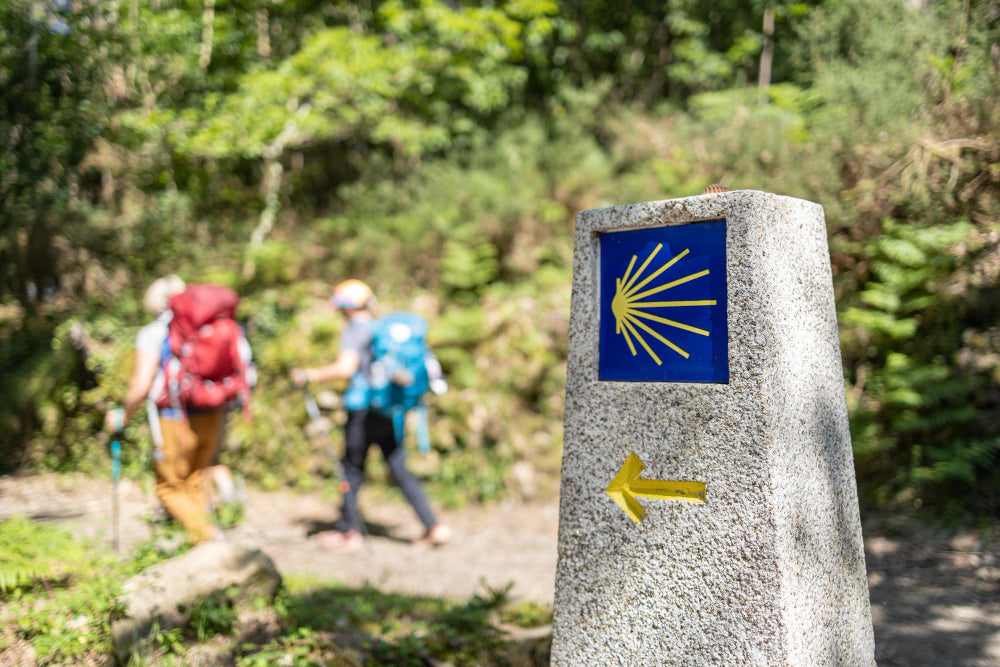
You've probably heard friends light up talking about "the Camino." You've seen photos on social media of yellow scallop shells on blue backgrounds, arrows pointing down dusty paths, and smiling people with backpacks. But what exactly is this phenomenon that draws hundreds of thousands of people from around the world every year? Why would anyone choose to walk hundreds of kilometres?
This article is your complete guide to understanding everything about the Camino. We'll bust common myths, share practical advice, and explore why this experience has become one of the most transformative journeys you can take in life — and, why not, one of the most unforgettable gifts you can give.
What is the Camino, Really? An Unforgettable Experience, Not Just a Pilgrimage
The Camino is a modern cultural and social phenomenon describing the explosive popularity of walking the pilgrimage routes to Santiago de Compostela. It is both a physical and inner journey, driven by a wide range of motivations — from spiritual and religious reasons to a desire for adventure, athletic challenge, or personal renewal.
While the Camino de Santiago was once walked almost exclusively by devout Christian pilgrims, today it has become a universal space. Its trails are shared by people of all ages, nationalities, and beliefs. More than 400,000 credenciales (pilgrim passports) are issued every year, and studies show that nearly half of all pilgrims set out for non-religious reasons.
So what does the Camino de Santiago mean today? It means:
- Adventure: Crossing breathtaking landscapes, from the Pyrenees mountains to the green hills of Galicia and the Atlantic coastline.
- Personal challenge: Pushing past physical and mental limits, walking an average of 20–25 km per day for days or weeks on end.
- A digital and mental detox: A break from the relentless pace of modern life, and a chance to reconnect with nature and your own thoughts.
- Community: A unique bond forms between pilgrims. The greeting "Buen Camino!" becomes a universal thread, and evenings in albergues are filled with stories and mutual encouragement.
At its core, the Camino is about simplification. The daily routine strips back to a simple cycle: wake up, walk, eat, sleep. That simplicity opens up an incredible mental space for reflection, self-discovery, and appreciation of the small things in life.
How religious is the Camino de Santiago today?
Although its origins are deeply religious, the Camino today is a universal experience. Around half of all pilgrims walk the route for non-religious reasons — personal growth, adventure, athletic challenge, or a desire to connect with nature and other people.
A Brief History and Its Meaning: Why Do Thousands Walk the Camino de Santiago?
To understand the phenomenon as it exists today, a quick look at its history is essential. Tradition holds that in the 9th century, the tomb of Saint James (Santiago in Spanish) — one of the apostles of Jesus — was discovered in Galicia, in northwest Spain. The site quickly became one of the most important pilgrimage destinations in Christendom, alongside Rome and Jerusalem.
Throughout the Middle Ages, a vast network of roads spread across Europe, all leading to Santiago de Compostela. These routes were more than simple pathways — they were cultural, economic, and spiritual corridors that helped shape the history of an entire continent.
"The Camino is a metaphor for life: it has its ups and downs, sunny days and rainy ones, moments of solitude and moments of togetherness. What matters is that you keep walking."
After centuries of decline, the Camino experienced a remarkable revival in the late 20th century. Today, the motivations of modern pilgrims are as diverse as the landscapes they walk through:
- Spiritual seeking: Whether deepening religious faith or pursuing a more secular kind of spirituality, the trail offers time and space for introspection.
- A turning point: Many people set out on the Camino during a moment of transition — after finishing studies, between jobs, following a breakup or a loss. The walk becomes a rite of passage.
- Health and fitness: For some, it's an athletic challenge — a way to test their endurance and enjoy the physical and mental benefits of long-distance walking in nature.
- Connection and community: The desire to meet people from different cultures and to be part of a temporary but deeply meaningful community is a powerful draw.
The Main Camino Routes: Choose Your Own Adventure
There is no single "Camino." There is an entire network of Camino routes, each with its own character, difficulty level, and charm. Choosing the right route is the first step in planning your journey. Here's a comparison of the most popular options:
| Route | Typical Starting Point | Approx. Distance | Estimated Duration | Highlights |
|---|---|---|---|---|
| Camino Francés (French Way) | St-Jean-Pied-de-Port | ~800 km | 30–35 days | The most popular and social route; excellent infrastructure (accommodation, restaurants); varied landscapes. Ideal for a first Camino. |
| Camino Portugués (Portuguese Way) | Lisbon / Porto | ~620 / ~260 km | 25 / 10–12 days | Relatively flat, with coastal and central options; growing in popularity. Starting from Porto is perfect for a two-week trip. |
| Camino del Norte (Northern Way) | Irún | ~825 km | 35–40 days | A spectacular coastal route, more physically demanding with more elevation change; less crowded than the French Way. |
| Camino Inglés (English Way) | Ferrol / A Coruña | ~116 km | 5–6 days | A short, historically rich route — perfect for those with limited time who still want to earn the Compostela (official pilgrim certificate). |
For those who can't take a full month off, there are plenty of options to walk just a section of the route. The most popular is the final stretch of the Camino Francés, from Sarria to Santiago (~115 km), which can be completed in 5–7 days and meets the minimum distance required to receive the official certificate.
Getting Ready for the Camino: Essential Gear and Physical Training
A successful Camino experience begins long before you take your first step on the trail. Proper preparation will save you a lot of grief — and blisters.
Camino Gear: Less Is More
The golden rule of packing is that your backpack should weigh no more than 10% of your body weight. Every gram counts. Here's the essential list:
- Backpack (30–40 litres): Choose a quality pack with a good support system and hip belt.
- Trekking boots: NOT NEW ONES! Break them in for at least a month beforehand on long walks so they mould to your feet. These are the single most important piece of gear you'll carry.
- Trekking socks: Invest in 2–3 pairs of merino wool socks, which prevent blisters and dry quickly. Avoid cotton!
- Layered clothing: A moisture-wicking base layer, a fleece mid-layer, and a lightweight waterproof and windproof jacket. Convertible trekking trousers are an excellent option.
- Lightweight sleeping bag or liner: Most hostels provide blankets, but a silk or cotton liner is hygienic and barely takes up any space.
- First aid kit: Blister plasters (Compeed), antiseptic, pain relief, and any personal medication.
- Useful extras: Trekking poles (highly recommended!), a reusable water bottle, a headlamp, sunscreen, and a hat.
Expert tip: Before you leave, pack your bag fully and walk a few kilometres with it. You'll quickly discover what's unnecessary and what's causing discomfort.
Camino Physical Training: Build Up Gradually
You don't need to be a seasoned athlete, but a solid base level of fitness will make a real difference. Here's a simple plan:
- Start 2–3 months out: Begin with regular walks of 5–10 km, two or three times a week.
- Increase distance progressively: Add a few kilometres each week, building up to 15–20 km walks on weekends.
- Simulate real conditions: Walk on varied terrain (hills, trails) wearing the boots and backpack you'll use on the Camino.
- Complementary training: Leg and back strengthening exercises (squats, lunges) will help prevent injuries on the trail.
Life on the Camino: From Albergues to Daily Budget
The day-to-day logistics are part of the trail's magic. Expect simplicity, not luxury.
Albergue: The Spanish term for pilgrim hostels. They offer basic accommodation, usually in shared dormitories with bunk beds, at affordable prices (between €8 and €15 per night). They can be public (municipal) or privately run.
Staying in an albergue is an experience in itself. It's where pilgrims gather at the end of each day, share their stories, cook together, and tend to their tired feet. To access these facilities, you'll need a Credencial del Peregrino (pilgrim passport), which you get stamped at stops along the route each day.
Camino de Santiago Budget: What Does the Adventure Cost?
The Camino is one of the most affordable long-distance journeys you can take. A realistic daily budget sits between €35 and €50 per day. This covers:
- Accommodation: €10–15 for a public or private albergue.
- Food: €20–30. Many restaurants offer a menú del peregrino (pilgrim's menu) with three courses and wine for €10–14. Alternatively, you can cook at the albergue.
- Other expenses: Around €5 for a coffee, a beer, a snack, or something from the pharmacy.
How much does a day on the Camino de Santiago cost?
A reasonable daily budget for the Camino is between €35 and €50. This covers accommodation at an albergue, food (a mix of restaurant meals and supermarket shopping), and small incidental expenses. Your actual spend will vary depending on your personal travel style.
The Camino de Santiago as a Gift Experience: Why Is It the Perfect Idea?
Instead of giving an object, why not give a transformation? The Camino de Santiago is the perfect gift for someone who is craving a break, a challenge, or a fresh perspective. It's an investment in wellbeing, lasting memories, and personal growth.
This kind of journey can feel daunting, especially for a first-timer. That's why a guided package can take the stress out of the logistics and add an extra layer of comfort and confidence. An experience like Camino for Women – Coastal Edition, for example, focuses on walking a stunning section of the Portuguese Way, combining daily hiking with comfortable accommodation and the support of a group of like-minded, courageous women.
An experience like this isn't just a holiday — it's a gateway to a whole new world: the world of those who have walked the Camino and come home changed. It's a gift that keeps giving long after the journey is over.
Whether you walk it solo, with friends, or as part of a guided group, the Camino de Santiago will challenge you, inspire you, and almost certainly change you. It's more than a road — it's a state of mind. ¡Buen Camino!